

Image
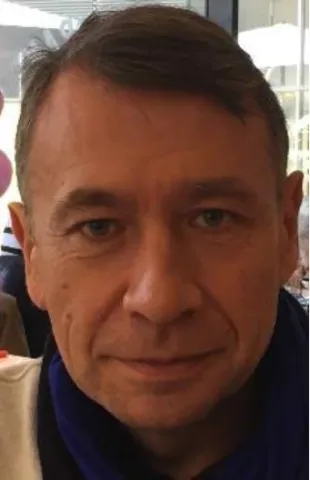
What was your background before IESA arts&culture?
I am at IESA with a view to a career change, as I previously worked as a marketing and communication manager in the health insurance sector. Following a change of shareholders and strategy at my last company, I preferred to leave it to seize the opportunity to make my passion for architectural and historical heritage my professional world.
Which program did you complete at IESA arts&culture and why did you choose it?
I took the Professional Master in Cultural Project Management (class of 2016/2017) because I want to become a monument administrator.
What did you expect from this program? What do you take away from it?
I expected this Master’s to give me knowledge about the development strategy of a heritage site. Such sites have a significant need for funding, which will be less and less provided by government subsidies.
That is why I wanted to gain knowledge in audience development, particularly tourist audiences, and in sponsor research. I am completely satisfied with what the Master’s brought me in these areas, even though this program is not specialized in heritage enhancement. The courses in cultural engineering, patronage, cultural financing, and the cultural web helped me a great deal.
What did the school and your program bring you?
This Master’s allowed me to become operational across all dimensions of a cultural project: administrative, legal, marketing, financial and accounting, production, and team management, given that many roles are required in cultural events and heritage activities. This program gives us both concrete, highly practical know-how and a real strategic dimension. And it is also a springboard to my new professional life, by building self-confidence and helping us make the cultural sector our own.
What are the highlights of the program?
The first highlight is the opportunity to engage with all the speakers and professors, who are specialists in their fields and bring a professional vision that enriches us and ultimately gives us an overall view of the cultural sector. Then there are the tutorials, which let us lead a group project on cases (this year, patronage for Strasbourg and cultural mediation with the Louvre). Finally, the PGR (real-scale project) is a long-term piece of work, since it lasts throughout the Master’s and gives us the chance to put our skills into practice from design to completion. This work has real value because time allows us to let our idea mature and refine it through reflection and by confronting it with market elements that we research through a marketing study and by meeting professionals. And our initial idea must be validated at every level: legal, marketing, financial, distribution, mediation, production. It is 360° work.
What is your internship today?
I am currently interning at a château in Île-de-France on patronage development.
What did IESA arts&culture bring you for your career plan?
- Confirmation of my initial career-change choice
- Enthusiasm for my new professional life
- A generalist, global vision of the cultural and heritage sector