

The Program
Program overview
- Communication and media: history and evolution of media, digital innovations and media
- Art, culture, communication and media
- Sociology of Audiences and Cultural Issues
- Major Trends in Contemporary Creation
- Digital Innovations and Communication
- Press Relations and New Influencers
- Event Communication
- Communicating on social media: content strategies and storytelling
- Brand Identity on the Web
- Communication Project Methodology and Management
- Cultural Administration
- Economics of Culture
- Patronage and Funding
- Literary and Artistic Property Law
- Heritage Law and Labor Law
- Producing communication tools: desktop publishing and creating a WordPress site
- English for the Cultural Sector
- Brand Digitalization Process
- Principles, characteristics and methodologies of search marketing (SEM): organic search (SEO), paid search (SEA)
- Audience Specificities and Writing Workshops
- Communicating about an artist or a project: pitching a project, giving an interview
- Media Plan and Viral Marketing
- Using digital community tools in developing communication strategy
- Writing a strategic recommendation
- Using art and culture in a communication campaign
- Communication Project Methodology and Management
- Crisis communication: analysis and management
- Cultural communication: international comparative studies
- Budgeting, Accounting and Payroll
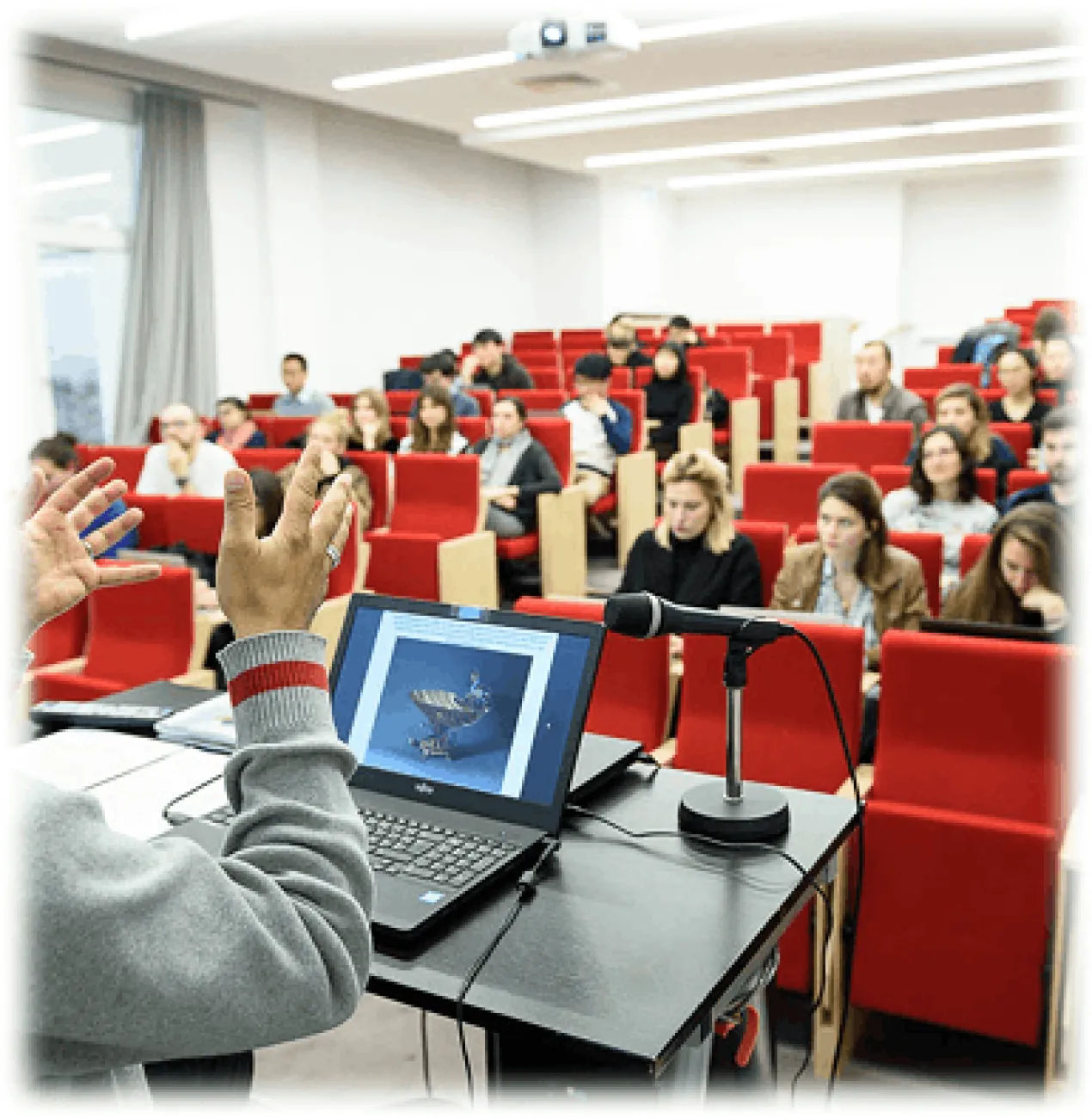
Become a Cultural Communications Professional!
For you, art lives as much online as on stage or in galleries. Today’s artists make themselves known and build audience loyalty on social media, and cultural institutions have followed suit: posts, performances, and virtual events are their new ways of communicating to promote their programming or their artists.
This Master will let you improve your digital marketing and communications strategy and their operational implementation, and gain mastery of social media and influence tools (current and emerging). Great attention is also paid to improving professional English specific to these careers.
At the end of this program, you will be able to become a digital marketing manager, an influence and social media officer, a digital content director, or an account manager at a digital communications agency.
Key Information About the Master
| Program | Master Cultural Communication Strategy |
|---|---|
| Duration | 2 years |
| Admission | Bac+3 for entry into the 1st year |
| Lateral Admission | Possible in the 2nd year depending on profile |
| Start Date | October 2027 |
| Schedule | Professional program, work-study possible |
| Certification | RNCP title no. 40856 - level 7 “Global Communication Manager” |
| Fees 2026-2027 | €9,700 in the 1st year; €10,300 for M2 lateral admission; €150 in tuition fees |

Why Choose the IESA Master in Cultural Communication Strategy?
Become Professional Through Work-Study
The program can be taken as work-study. Periods in companies, internships, real projects, and professional support allow you to test what you learn against the expectations of the cultural sector.
Develop Expertise in Cultural Communication
The program helps students understand the issues specific to cultural institutions, creative industries, events, artists, and cultural projects. Students learn to adapt messages, materials, and channels to their target audiences.
Working on Real Projects
Students carry out communication projects, business cases, 360° strategies, visual productions, media plans, digital campaigns, and professional recommendations.
Master Digital and Social Media Strategies
The Master covers the challenges of digital marketing, social media strategy, influence, data, e-CRM, digital media, and new digital uses in the cultural sector.
Go International
The program includes courses in English, an intercultural dimension, and a study trip to the United States, notably San Francisco, according to the information shown on the current page.
Being Supported by Professionals
Classes, workshops, and simulations are led by instructors, speakers, and professionals from the communication, marketing, culture, and creative sectors
Program objectives
The Master aims to train professionals able to design, lead, and evaluate innovative communication strategies, suited to the specific challenges of cultural institutions, creative industries, and artistic projects. The program is based on project-based learning, strong professional immersion, and an approach that integrates both the uniqueness of cultural productions and the most up-to-date analytical tools.
- Master the fundamentals of communication applied to the cultural sector
- Design relevant communication strategies, incorporating a data-driven approach
- Lead and implement communication projects in the cultural field
- Integrate the challenges of innovation, digital technology, and new cultural practices
- Develop a strategic mindset and critical analysis skills
The Skills
The Global Communication Manager title aims at the acquisition of the following skills:
- Develop an organization’s communication strategy
- Lead the rollout of a communication strategy
- Manage the performance of a communication strategy
- Manage the internal and external players of a communication campaign
What Is the Curriculum of the Master in Cultural Communication?
Year 1
Unit 1- CCIs and Communication
- Festival market
- Art history and image analysis
- Theater workshop / Public speaking
- Overview of culture
- Sociology of innovations: AI, social media, big data
- Cultural sectors internationally: Europe and USA
- Communication and creativity
Unit 2- Digital Communication and Marketing Strategies
- Marketing strategy for the CCIs
- Communication issues and fundamentals
- Strategic planning
- Art Direction and Creation
- Influence strategy in the cultural sector
- Strategic AI (Prompt engineering)
- Social media strategy for the CCIs
- 360 media strategy and campaign
- Digital marketing (Google Ads, CRM, AI)
Unit 3- Communication Tools and Materials
- DTP/print (AI)
- Video workshop
- Design thinking
Unit 4- Management and Law
- Image rights / DPLA / Trademark law
- Project management (AI, budget, scheduling, supplier relations)
- Management / GEPC
Unit 5- Professionalization/English
- Professionalization pathway / Meetings with professionals
- Business case
- Work-study / internship defense - Exams
- CSR (lecture)
- Certified title preparation
- Cultural outings
Year 2
Unit 1- Communication and Culture
- Screenwriting and storytelling techniques
- Music and street culture
- Film market, audiovisual, streaming platforms
- Communication theories of the CCIs: issues and perspectives
Unit 2- Digital Communication and Marketing Strategies
- Data marketing, marketing automation, E-CRM (AI)
- Press and public relations
- Marketing studies
- Internal communication strategy
- Creative strategy for social platforms (Instagram, TikTok, Twitch, Discord…)
- Media strategy for the CCIs
Unit 3- Communication Tools and Materials
- Graphic identity and visual identity
- Creative AI (design, creation, prompting)
- Wordpress/UX
Unit 4- Management
- Business plan / business model
- Management / Recruitment techniques
Unit 5- Professionalization/English
- Production and communication of a cultural event
- Title coaching
- Professional Development
- Study trip (USA)
- CCIs and gender-based and sexual violence and harassment (VHSS)
- Certified title defense
- Cultural outings
- Defenses and exams
How Are Students Assessed?
Throughout the Master, skills acquisition is supported by a continuous assessment system designed to encourage individual progress, consolidate learning, and build ownership of professional methods. Students are assessed through individual and group work, oral presentations, case studies, monitoring files, group projects, and regular simulations.
This gradual follow-up makes it possible to:
– apply the knowledge acquired in concrete contexts tied to the challenges of the cultural sector;
– experiment with different professional roles and stances in a safe setting;
– receive regular feedback from instructors and professional speakers, in order to adjust one’s approach and gain autonomy.
Projects carried out in workshops or as part of core courses are designed as intermediate milestones, preparing students for the final certification exams.
These, held at the end of the cycle, validate the skills blocks of the Global Communication Manager professional title (RNCP 40856). They include:
- Block 1: Developing an organization’s communication strategy
Professional thesis, professional simulation based on a real or fictional case of developing a company’s communication strategy. - Block 2: Leading the rollout of a communication strategy
Professional simulation based on a real or fictional case of rolling out a company’s communication strategy, professional simulation based on a real or fictional case of crisis management within a company. - Block 3: Managing the performance of a communication strategy
Professional simulation based on a real or fictional case of evaluating the performance of an organization’s communication strategy. - Block 4: Managing the internal and external players of a communication campaign
Practical case based on a real or fictional case of hiring a team member in a communication team, professional simulation based on a real or fictional case of a company using outside providers to deploy a communication campaign, professional simulation based on a real or fictional case of managing a communication department, professional simulation based on a real or fictional case of team coordination.
Project-based learning
The Master in Cultural Communication Strategy relies on active, career-oriented, and immersive teaching, aimed at linking theoretical input to concrete communication situations in the cultural field. The goal is to let students acquire strategic and operational skills, while developing their autonomy, analytical mind, and ability to manage complex projects in line with the realities of the sector.
1. Academic courses to build expertise
In-person classes, led by faculty researchers and industry professionals, provide a solid grounding in communication strategies, cultural sector issues, digital transformation, mediation practices, influence, brand content, and technological innovation.
2. Project-based learning to foster learning by doing
The program gives a central place to experimentation through real projects carried out in groups and independently, in connection with real cultural organizations or events. In the first year, students design and deploy a 360° communication strategy around a cultural event, including visual productions, digital strategy, media plan, budget management, partnerships, and impact assessment.
3. Workshops, and professional simulations
Throughout the program, thematic workshops (influence, creative writing, social media strategy, experience design, storytelling, etc.) let you explore specific tools and methodologies in an intensive and participatory format. These workshops are led by practicing professionals and result in presentations under near-professional conditions.
4. A personal entrepreneurial end-of-cycle project
In the second year, each student develops and carries out an individual project with strong cultural value (start-up, artistic promotion initiative, platform, exhibition or mediation project…). This project receives individual support from a professional mentor, and concludes with a presentation before a certification jury, validating technical and strategic skills as well as the ability to carry out a coherent approach from start to finish.
5. Gradual professional immersion
The program is designed to foster a gradual entry into the professional world thanks to a suitable rhythm (work-study or a long second-year internship), regular meetings with players in the cultural sector, and the completion of a real business case under commissioned conditions. Students are thus placed as full-fledged players in a cultural project, from design to event communication.
Open Day: December 5
Open days let you discover the campus, meet the teams, ask your questions about the program, admissions, work-study, student projects and career opportunities.
It is also an opportunity to better understand the teaching approach of IESA arts&culture and the organization of these programs.

Work-Study, Internships, and Professionalization
The Master in Cultural Communication Strategy is a professionalizing program that can be completed as work-study. The curriculum follows an alternating schedule, with periods in a professional organization as internships and/or work-study.

These experiences count toward the validation of the program. They allow students to put the skills acquired in class into practice, expand their network, and better understand what cultural communication careers require.
Professional development is based on:
- work-study available
- internships in professional organizations
- real group projects
- business cases
- workshops
- professional support
- meetings with sector professionals
- oral defenses and simulations
In work-study, tuition fees under a professionalization contract or an apprenticeship contract may be covered in whole or in part by the company or a funding body, OPCO.
What careers after a Master in Cultural Communication Strategy?
The Master in Cultural Communication Strategy prepares students for roles related to communication, digital marketing, influence, social media, content strategy, consulting, and cultural project management.
Early career Communications Officer
Account Executive
Public Relations and Public Venues Officer
Media Research Officer
Media Planner
Digital Strategy Manager
Media and Social Media Manager
After 3 to 5 years of experience Global Communications Manager
Event Project Manager
Digital Communications Project Manager
Communications Project Manager
Event Consultant
Client Director
Marketing and Communications Manager
Communications Manager (internal/external)
Communications Consultant
After 10 years of experience Event Agency Director
Communications Agency Director
Marketing and Communications Director
Institutional Communications Director
International Cultural Communication
The Master in Cultural Communication Strategy is resolutely international in focus:
- Professional English courses are provided to students
- Design thinking is taught in English
- Study or internship experiences abroad are encouraged
- Students take part in the projects, courses, or specialty seminars of the 4 international departments of the Center for Applied Research in Contemporary Cultures (Africa, Latin America, Asia, Europe)
- The school welcomes 20% international students, fostering exchange and intercultural dialogue
Study trip to San Francisco: Master in Cultural Communication Strategy
IESA Communication Master students set off on an exceptional study trip to San Francisco in January 2024. Accompanied by their professors and immersed in the buzz of the city, they explored a host of emblematic institutions and companies, from the SF MOMA to Uber’s headquarters, by way of the San Francisco Ballet and the Golden Gate Bridge. Each day offers inspiring discoveries and enriching exchanges with cultural professionals!
Find out how these students take part in the American Dream experience while sharing French culture through the streets of San Francisco.

Our Alumni Share Their Stories

"
Communication courses at IESA are in line with today’s working world, and the case studies are very interesting because they let us simulate real situations…"
Victoria
Certification
This master prepares students for the level 7 RNCP title:
"Global Communications Manager"
| Employment rate | 100% at 6 months for graduates, class of 2024 (Latest France Compétences rate - RNCP title 40856) |
|---|---|
| Certification rate | 72.4%, class of 2024 |
| RNCP Code | RNCP40856 |
Professional certification Global Communications Manager from ESGCV and Istituto Marangoni, level 7 registered with the RNCP under number 40856 by decision of the Director General of France compétences dated 25/06/2025 for a period of 3 years.
How to Apply to IESA?
Admission is based on an application file and an interview with the admissions committee
- 1. You find out about the school and its programs.
- 2. You apply to the school by filling out a form on the website.
- 3. We call you to schedule an admission interview
- 4. A few days after the interview, you receive your admissibility decision
How Much Does the Program Cost?
For the 2026-2027 year, the fees are as follows:
| Year | Tuition |
|---|---|
| 1st year | 9 700 € |
| 2nd year | 10 300 € |
| Tuition fees | 150 € |
Applicants can contact the admissions team to find out about:
- payment options
- funding options
- the conditions related to work-study
In work-study, program fees under a professionalization contract or an apprenticeship contract will be covered in full or in part by the employer or by a funding body (OPCO).
The Master lasts 2 years.
Number of hours of face-to-face teaching and exams:
- Master 1: 511 h
- Master 2: 557 h
Current-year schedule: the number of hours may vary slightly from year to year.
The program follows an alternating schedule, allowing for part-time and full-time professional placements (internships and/or work-study), which are mandatory to complete the program.
Initial prerequisite and work-study:
- Entry into the 1st year (M1 – 2-year program): Hold a level 6 certification (Bac+3), or an equivalent degree (foreign degree, etc.), or have earned 180 ECTS credits, in the targeted field or one related to marketing and/or communication, business, management, etc.
- Entry into the 2nd year (M2 – 1-year program): Hold a level 6 certification (Bac+4), or an equivalent degree (foreign degree, etc.), or have earned 240 ECTS credits, in the targeted field or one related to marketing and/or communication, business, management, etc.
Admission is based on the submission of an application file and an interview with the admissions committee.
Access timeframes: Admissions are open from October 2026 to September 2027 for an October 2027 start. Applications are processed within 3 weeks maximum after receipt of the complete file. Enrollment is possible until the start date, subject to available places.
By exception, enrollment is possible after the start date of the program, following review and verification of the learner’s ability to catch up on the learning already delivered, within a maximum of two months after the start of the program.
This program can be completed as work-study. The program follows an alternating schedule, with internships and/or work-study at professional organizations. These placement periods are part of the program’s validation.
Apprentice dropout rate at CFA ECAD during the 2024-2025 year: 2% (Class of 2025)
The program takes place at IESA on the LE DELTA campus (16 rue Claude Bernard, 75005 Paris) and at partner cultural venues.
IESA premises are accessible to people with disabilities. The admission interview and the course of study can be adapted to the needs of those concerned, who are therefore invited to express them as soon as they apply to the school. Contact: handicap@iesa.fr.
Equivalences: No equivalence.
Transfer options: No transfer options.
Further studies: The Master in Cultural Communication Strategy is designed as a professionalizing Bac+5 program, whose primary purpose is to enable direct entry into working life, preparing students to take on positions of responsibility in the cultural communication sectors.