

THE PROGRAM
Program overview
- Cultural Administration, Cultural Economics, Patronage and Funding
- Copyright law, heritage law, liability law and labor law applied to the cultural sector
- Project Methodology and Management
- Cultural Communication and Marketing, Desktop Publishing and Website Creation on WordPress
- English for the Cultural Sector and Professional English
- Budgets, Business Plan, Accounting and Payroll
- Analysis of Media and Cultural News Webmarketing
- Entrepreneurship in the Cultural Sector
- Job search (workshops and meetings with professionals)
- Art, Architecture and Heritage
- Cultural Tourism and Marketing
- Cultural policies for heritage promotion and cultural tourism
- Cultural Engineering and Regional Planning
- Museography
- Heritage Labels
- Cultural merchandise
- Cultural Mediation and Digital Tools for Showcasing Heritage
- Culture and Sustainable Development
- Digital Publishing
- Case study: developing a feasibility study for a heritage site
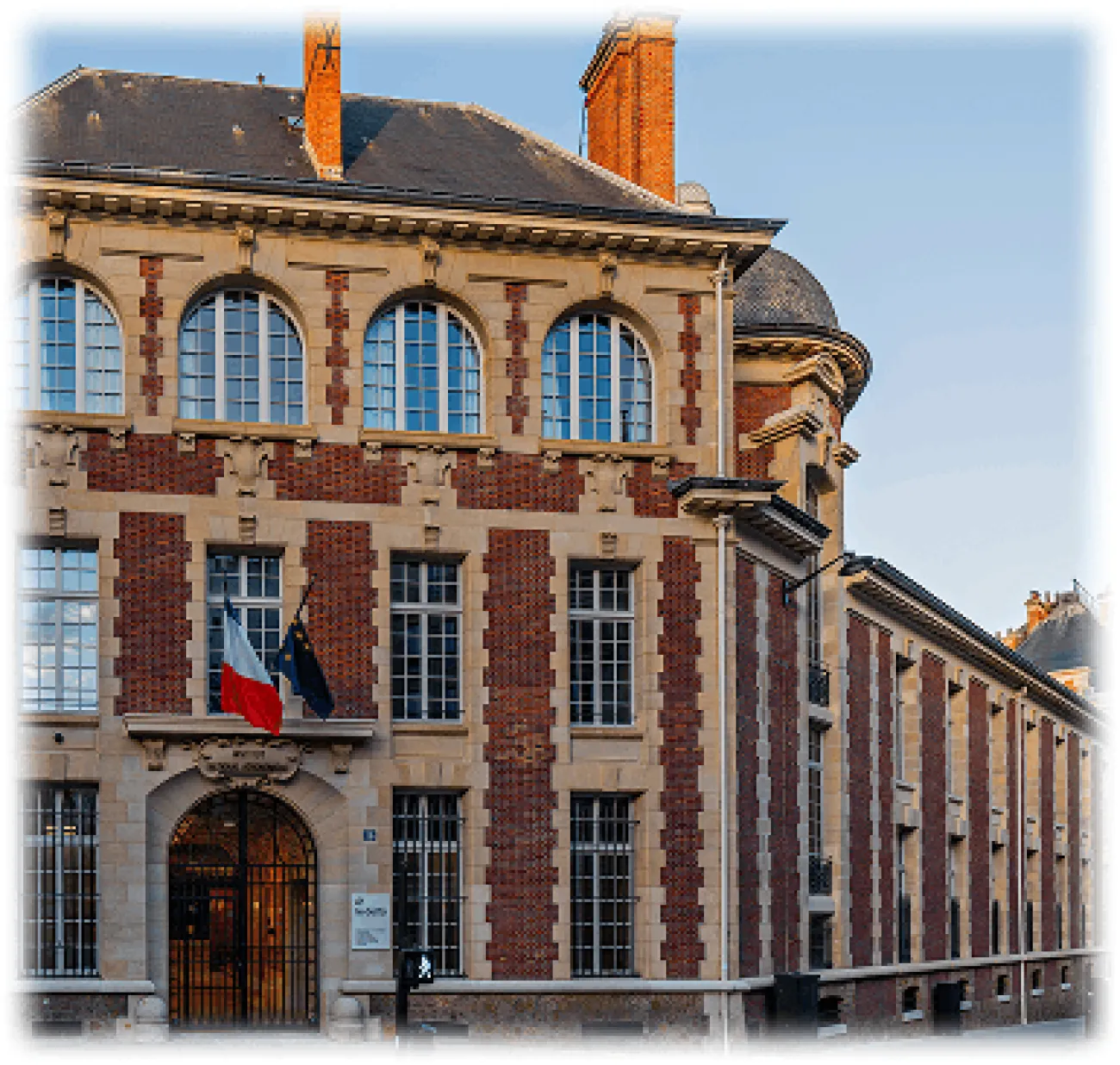
Showcasing the Cultural Heritage of Territories
Culture is not limited to the works found in darkened theaters and museums; it can also be encountered around a street corner, on the walls of a cave, or at the top of a mountain. Countries and regions are rich in natural, historical, and artistic heritage, both tangible and intangible, which touches all audiences and needs to be preserved as much as showcased.
This master’s program, focused on the heritage to be passed on, will enable you to acquire the skills and knowledge needed to manage projects in the field of heritage and cultural tourism, in line with current concerns about preservation and sustainability.
You will then be able to work as a heritage site administrator, a project manager in a regional cultural department, or a cultural tourism manager.
Key Information About the Master
| Program | Master in Cultural Heritage and Tourism |
|---|---|
| Duration | 2 years |
| Admission | Bac+3 for entry into the 1st year |
| Lateral Admission | Possible in the 2nd year depending on profile |
| Start Date | September |
| Schedule | Professional program, work-study possible |
| Certification | RNCP title no. 42330 – level 7 "Artistic and Cultural Projects Administrator" |
| 2027-2028 Fees | €9,700 in the 1st year; €9,950 for M2 direct entry; €150 in tuition fees |

Why choose the IESA Master Heritage and Cultural Tourism?
Training in Sustainable Tourism Issues
The program addresses the issues of sustainable cultural tourism, preservation, CSR, and ecological transition. The goal is to train professionals capable of showcasing heritage without setting it against its protection.
Real Heritage Projects
The program gives significant weight to case studies, field projects, and professional simulations. Students learn to analyze a region, identify its heritage issues, and build suitable promotion initiatives.
Learning in the Field
Site visits, surveys, mediation workshops, professional meetings, and case studies allow students to test what they learn against the realities of the heritage and tourism sector.
Exploring Tangible and Intangible Heritage
The master’s program covers artistic, architectural, natural, historical, and intangible heritage. Students develop a broad vision of cultural legacies to be passed on, documented, and promoted.
Benefit from an International Outlook
The program has an international dimension, with English courses, international speakers, opportunities for internships abroad, and a study trip to Marrakech focused on intangible heritage.
Gradually Building Your Career Plan
Students are supported in their orientation, professional development, and career planning through internships, work-study, professional meetings, and supervised projects.
What Are the Goals of This Program?
This program is designed to address current concerns around engaging with audiences, showcasing regions, and preserving heritage:
- Acquiring fundamental knowledge of artistic, architectural, natural, and intangible heritage, as well as national and regional cultural policies;
- Developing sensitivity to issues of regional revitalization through heritage;
- Acquiring knowledge and skills in cultural project management that address sustainability and diversity challenges, and in particular acquiring expertise in sustainable tourism.
What You Will Learn
The Artistic and Cultural Project Administrator title aims at acquiring the following skills: • Define an artistic and cultural project
- Defining an Artistic and Cultural Project
- Conducting Administrative and Financial Operations of an Artistic and Cultural Project
- Deploying a Marketing and Distribution Strategy for an Artistic and Cultural Project
- Manage an artistic and cultural project
- Developing the Funding Strategy of an Artistic and Cultural Project (Specialization)
What Is the Program of the Master Cultural Heritage and Tourism?
Year 1
UE1- Heritage and Regional Development Challenges
- A History of World Heritage
- Women’s Heritage in Question
- Cultural engineering
- Monitoring, cultural news, and heritage
- Culture and the environment: challenges and issues for the cultural sector in ecological transition
- Professional Seminar at the Palace of Versailles
UE2- Heritage: Audiences and Cultural Mediation
- Sociology of Culture
- Audiences and Mediation
- Audiences and Museums: New Challenges
- Scenography and Museography
UE3- Professional Development
- Practical case - VMF Prize: local and eco-responsible tourism
- Professional development: sector and regional study
- Meetings with professionals
- Orientation Seminar
- Orientation Seminar
- Public speaking and storytelling
- CSR
- Cultural English
UE4- Law and Funding of Culture
- Intellectual Property Law, Creative Commons and GDPR
- Introduction to Cultural Rights
- Administrative and financial management (budget, grants, contracts, agreements…)
- Knowing how to secure funding
- Archiving policy
UE5- Audience Development
- Fundamentals of audience development for cultural venues
- Digital tools serving audience development for cultural venues
UE6- Cultural Communication Strategies
- Designing a 360 communication strategy
- DTP 1
- Responsible digital technology
UE7- Cultural Project Management
- Leading an innovation project with creativity
- Cultural project management methodology applied to heritage promotion
- Negotiation - conflict prevention and resolution
Year 2
UE1- Heritage and Regional Development Challenges
- Art, Architecture, and Heritage
- On-site tutorial: Museography
- Intangible Heritage case study: study trip to Marrakech
- Sustainable Tourism
- Cultural Third Places
UE2- Professional Development
- Career support and meetings with professionals
- Cultural English Applied to Cultural Heritage
- Cultural Entrepreneurship
- Design and implement a cultural mediation initiative
UE3- Cultural Project Management
- Cultural project management methodology
- Budgeting a cultural project applied to the real-scale final-year project
- Responsible digital technology
- Introduction to the carbon footprint method
- Lead a Project Team
UE4- Law and Funding of Culture
- Funding and partnership strategy for a heritage promotion project
- Fundraising techniques
- CSR
- Archiving policy
UE5- Audience Development: Cultural Communication and Marketing
- Deploy a cultural communication and marketing strategy
- Marketing and distribution strategy
- Digital communication
- Cultural merchandise
- Building a website
- DTP 2
How Are Students Assessed?
General assessments:
Throughout the program, students are assessed through continuous assessment (case studies, presentations, reports, written and oral assignments) and semester exams validating theoretical and methodological knowledge.
Students also complete internships or follow the program through an apprenticeship contract. These periods in a professional setting result in an internship or work experience report, defended orally before an academic jury. This assessment verifies students' ability to apply what they have learned in real-world contexts in the arts and culture sector.
Learn About the Assessment Methods for the Professional Certification
Assessment for the professional certification of the RNCP title 42330:
The certified level 7 title "Artistic and Cultural Project Administrator" is awarded after validation of all 5 skill blocks. Each block involves simulated or real professional scenarios, with the submission of structured deliverables, assessed by a jury of professionals.
Defining an Artistic and Cultural Project
Professional simulation based on a real or fictional case involving the definition of an artistic and/or cultural project.
Case study based on a real or fictional case of designing a cultural and artistic mediation proposal, including documentation on the definition of an artistic and cultural project
Conducting Administrative and Financial Operations of an Artistic and Cultural Project
Practical case based on a real or fictional practical case involving the conduct of the administrative and financial operations of an artistic and cultural project.
Professional simulation based on a real or fictional professional situation of implementing a partnership
Deploying a Marketing and Distribution Strategy for an Artistic and Cultural Project
Professional simulation based on a real or fictional case of deploying a digital marketing and distribution strategy for an artistic and/or cultural project
Practical case based on a real or fictional project to be carried out in the art market and/or cultural industries sector
Managing an Artistic and Cultural Project
Professional simulations based on a real or fictional case involving the coordination of a project’s stakeholders, and on a real or fictional case of implementing a quality system following a project closure.
Practical case based on a real or fictional case presenting challenges in optimizing project management processes.
Developing the Funding Strategy of an Artistic and Cultural Project
Professional simulation based on a real or fictional professional simulation involving the definition of the fundraising strategy, the negotiation of partnerships and sponsorships, the implementation of loyalty actions, and the assessment of the financial impact of the partnerships and sponsorships of an artistic and cultural project.
Project-based learning
The Master Cultural Heritage Development combines academic teaching with progressive immersion in professional practice in order to train experts capable of envisioning, leading, and promoting sustainable heritage projects, in connection with contemporary issues of region, tourism, and culture.
The courses provide solid knowledge of the history, conservation policies, stakeholders, regulatory frameworks, and economic models specific to heritage. These fundamentals are deepened through seminars, case studies, workshops, and talks by professionals, in order to prepare students to meet field realities.
The program places central importance on putting knowledge into practice. Thematic workshops, field projects, and professional simulations punctuate the program. Among them, organizing the Vieilles Maisons Françaises Prize is a concrete and unifying experience, in which students are tasked with evaluating, selecting, and promoting a heritage site, in cooperation with institutional partners. This collective project places them at the heart of a real heritage transmission effort.
At the same time, site visits, field surveys, mediation workshops, and meetings with heritage stakeholders allow students to confront the diversity of contexts and issues, and to develop their analytical and adaptive abilities.
At the end of the program, each student develops a personal heritage promotion project, supervised by a professional in the field. This project, defended before a certification jury, demonstrates the ability to carry out a coherent, well-argued, and operational initiative, and to apply all the skills acquired throughout the program.
Open Day: December 5
Open days let you discover the campus, meet the teams, ask your questions about the program, admissions, work-study, student projects and career opportunities.
It is also an opportunity to better understand the teaching approach of IESA arts&culture and the organization of these programs.

Work-Study, Internships, and Professionalization
A Professional Program, with Work-Study Possible
The program can be completed as work-study. It follows an alternating schedule, with periods at professional organizations in the form of internships and/or work-study.
These placement periods are part of the program’s validation and allow students to connect what they learn to the realities of the heritage and cultural sector.
Field Experience Throughout the Program
Professional development is based on:
- internships or work-study periods;
- group and individual projects;
- meetings with professionals;
- field case studies;
- mediation and promotion workshops;
- support toward professional entry.
Funding Your Work-Study Program
In work-study, program fees may be covered in full or in part by the employer or by a funding body (OPCO).
What Careers After a Master Cultural Heritage and Tourism?
The Master Cultural Heritage and Tourism prepares students for roles related to project management, heritage promotion, cultural tourism, mediation, regional development, and the administration of cultural organizations.
Regions and local authorities Project officer in a local authority
Territorial administrator specialized in culture Cultural project management Cultural project manager
Cultural engineering consultant
Heritage entrepreneur Heritage and mediation Heritage conservation officer
Head of cultural mediation for a region Cultural tourism Director of a tourist office
Tourism development officer for a local authority
Tour guide-lecturer Heritage communication Head of communication for a heritage site or institution
Graduates can work in local governments, heritage sites, cultural institutions, tourist offices, cultural organizations, heritage venues, associations, regional projects, or organizations involved in cultural promotion.
Certification
This master’s program prepares for the RNCP title level 7:
"Artistic and Cultural Project Administrator"
It certifies skills related to the definition, management, funding, distribution, and administration of artistic and cultural projects.
| Employment rate | 74% at 6 months for students awarded the title, class of 2024 (most recent France Compétences rate - RNCP title 42330) |
|---|---|
| Certification rate | 100%, class of 2025 |
| RNCP Code | RNCP42330 |
This title is issued by: ECAD Consultants - IESA arts&culture by decision of the Director General of France Compétences dated 05/29/2026 for a period of 3 years.
How to Apply to IESA?
Admission is based on an application file and an interview with the admissions committee
- 1. You find out about the school and its programs.
- 2. You apply to the school by filling out a form on the website.
- 3. We call you to schedule an admission interview
- 4. A few days after the interview, you receive your admissibility decision
How Much Does the Program Cost?
For the 2027-2028 year, the fees are as follows:
| Year | Tuition |
|---|---|
| 1st year | 9 700 € |
| 2nd year | 9 950 € |
| Tuition fees | 150 € |
Applicants can contact the admissions team to find out about:
- payment options
- funding options
- the conditions related to work-study
In work-study, program fees under a professionalization contract or an apprenticeship contract will be covered in full or in part by the employer or by a funding body (OPCO).
The Master Lasts 2 Years.
Number of in-class teaching hours and exams:
- M1: 504 hrs
- M2: 515 hrs
Current-year schedule: the number of hours may vary slightly from year to year.
The program follows an alternating schedule, allowing for part-time and full-time professional placements (internships and/or work-study), which are mandatory to complete the program.
Initial prerequisite and work-study:
- Entry into 1st year (M1): Hold a level 6 certification, or an equivalent degree (foreign degree, etc.), or have earned 180 ECTS credits in the targeted or a related field (art history, culture, etc.)
- Entry into 2nd year (M2): Hold a level 6 certification, or an equivalent degree (foreign degree, etc.), or have earned 240 ECTS credits, in the targeted or a related field (art history, culture, etc.)
Admission is based on the submission of an application file and an interview with the admissions committee.
Access timeframe: Admissions are open from October 2026 to September 2027 for an October 2027 start. Applications are processed within 3 weeks maximum after receipt of the complete file. Enrollment is possible until the start date, subject to availability.
By exception, enrollment is possible after the start date of the program, following review and verification of the learner’s ability to catch up on the learning already delivered, within a maximum of two months after the start of the program.
This program can be completed as work-study. The program follows an alternating schedule, with internships and/or work-study at professional organizations. These placement periods are part of the program’s validation.
Apprentice pass rate: 76.8% class of 2024 (Masters in Cultural Production: Performing Arts, Music, Film & Audiovisual, and Heritage)
Apprentice dropout rate at CFA ECAD during the 2024-2025 year: 2% (Class of 2025)
The program takes place at IESA on the LE DELTA campus (16 rue Claude Bernard, 75005 Paris) and at partner cultural venues.
IESA premises are accessible to people with disabilities. The admission interview and the course of study can be adapted to the needs of those concerned, who are therefore invited to express them as soon as they apply to the school. Contact: handicap@iesa.fr.
If you do not obtain the RNCP title, please note that if you have validated all the skills of a block, that skill block is yours permanently.
Equivalences: In the case of an equivalence, whether through VAE and/or the award of a skill block or an equivalent certification, it is up to the applicant to present this equivalence to the jury for validation.
Bridging paths: No bridging path for this program.
Further studies: This program is designed for professional entry.

Project