

Program
The program consists of 2 semesters of classes (600 hours) and a 6-month full-time internship allowing students to gain professional experience.
- History of Performance
- Film History
- Modern Art and Performance
- Finance
- Intellectual Property and Digital Law
- Derivative Rights
- Marketing & Communication
- Art Criticism and Cultural Studies
- Cultural Economics
- Research Methodology
- Project methodology
- Professional Meetings
- E-business
- Teambuilding
- History of Contemporary Art
- Performing Arts Management
- Audiovisual Production
- Event Management
- Public Relations
- Organizing a festival
- Cultural Mediation
The essential skills for managing events and artistic performances
Theater, stand-up, opera, dance, concerts, festivals… this master’s in performing arts management trains professionals for a management career in the diverse world of live performance. This interdisciplinary program brings together students from around the world to study the specific demands of the cultural industries in a globalized context.
An international group of professors with unique intercultural experience in different fields of the performing arts provides students with the theoretical and practical courses that will give them the skills needed to create, produce, and promote a cultural event.
Core courses in finance, law, digital marketing, and communications give students the skills needed to work in any public cultural institution or private production company, as well as to build a future career as an arts entrepreneur.
Program Highlights:
- Study Performing Arts in Paris, the World’s Cultural Capital
- Numerous visits and meetings with professionals in the sector
- A full-scale project to face the reality of production
83%
of students would recommend that a student pursue their studies at IESA
Toluna - Harris Interactive Survey - February 2025
Key Information About the MBA
| Program | MBA in Performing Arts Management & Entertainment |
|---|---|
| Duration | 9 months + 6 months of internship |
| Admission | Bac+4 completed |
| Start of the Academic Year | September or January |
| Language | The program is taught entirely in English |
| Certification | RNCP title no. 42330 - level 7 “Administrator of Artistic and Cultural Projects” |
| 2026-2027 Fees | €17,500; €150 in tuition-related fees |
What Are the Goals of This Program?
The MBA Performing Arts Management & Entertainment relies on a teaching approach that blends solid academic instruction, field experience, and concrete real-life scenarios through 2 trips during the year to discover the most dynamic scenes in Europe. This method enables students to gain both a critical understanding of the performing arts world and practical skills directly applicable in the professional world.
Regular meetings with performing arts professionals, immersion in production venues, and participation in highlights such as festivals or international gatherings: these concrete experiences let students confront the many facets of performing arts careers, build a solid professional network, and test their ideas in varied contexts.
This program aims to provide the methodological foundations and knowledge needed for a career in managing cultural projects related to the performing arts:
- Define an artistic and cultural project: theater, dance, concert, festival, stand-up…
- Manage administrative and financial operations to organize an artistic and cultural project autonomously
- Implement a digital marketing and distribution strategy for an artistic and cultural project to make it known and attract audiences.
- Manage an artistic and cultural project: program, distribution, communication, logistics, deadline management…
- Define and implement a funding strategy for an artistic and cultural project to ensure its financial viability relative to its costs and objectives.
What You Will Learn
The Administrator of Artistic and Cultural Projects title aims at the acquisition of the following skills:
- Defining an Artistic and Cultural Project
- Manage the administrative and financial operations of an artistic and cultural project
- Deploy a digital strategy for the marketing and distribution of an artistic and cultural project
- Manage an artistic and cultural project
- Define and implement the funding strategy for an artistic and cultural project (Specialization)
Program
1st semester
- History of performance
- Film history - Film studies
- Financial accounting
- Intellectual property law
- Marketing and communication
- Research methodology
- Deconstruction of music videos
- Philosophy of the performing arts
- Performing arts: History of music
- History of the performing arts
- Performing arts management regulations
2nd semester
- Digital art law
- Data analysis
- Team spirit development
- Audience development
- Performing arts management practices
- Event management
- Press relations
- Film festival organization
- Performing arts production management
- Project methodology
- Sociology of culture and cultural mediation
- Deconstruction of music videos
- Philosophy of the performing arts
- Performing arts: History of music
- History of the performing arts
- Performing arts management regulations
- Corporate law
- European policy and cultural management
- Critical media analysis
Assessment method
Assessment linked to the professional certification of RNCP title 42330:
The level 7 certified title “Administrator of Artistic and Cultural Projects” is awarded after validation of the 5 skills blocks. Each block involves simulated or real professional scenarios, with structured deliverables assessed by a jury of professionals.
Define an artistic and cultural project
In a professional scenario, the candidate produces a monitoring file, a feasibility study and the formalization of an artistic or cultural project. Based on a case study and documentation on defining an artistic and cultural project, the candidate proposes a mediation action.
Conduct the administrative and financial operations of an artistic and cultural project
In a professional scenario or case study, the candidate develops the business model of their project, the funding strategy and an administrative file, and implements a partnership strategy.
Deploy a digital marketing and distribution strategy for an artistic and cultural project
In a professional scenario, the candidate identifies targets and audiences and develops an operational marketing strategy and a communication action plan. Based on a case study on developing a ticketing sales strategy for a cultural business, the candidate presents a proposal to optimize sales profitability. Using a real or fictional online interface and documentation containing all the data needed to evaluate the purchase journey, the candidate develops a critical analysis and recommendations for improving the purchase journey.
Manage an artistic and cultural project
In a professional scenario, the candidate describes the planning for coordinating the project’s stakeholders and explains the methodology used, produces a brief outline and presents a continuous improvement file. Case study: Based on a given case presenting challenges in optimizing project management processes, the candidate proposes a team support plan.
Defining and implementing the funding strategy of an artistic and cultural project As part of a professional simulation, the candidate presents the fundraising objectives of an artistic and cultural project, develops a plan and proposed actions for negotiating partnerships and sponsorships, presents an analysis of financial data, and makes recommendations.
Project-based learning
Throughout their program, students are encouraged to engage in various professional projects, such as a festival, performing arts, or theater play project. They thus have the opportunity to apply the knowledge acquired during their studies and develop project management skills, which they will use in their final group project, launched at the end of the year.
Students are trained by a group coach and a producer who guide them throughout the process. A professional mentor provides advice to students and gives them access to a diverse professional network.
By acquiring a project methodology through these experiences, students, supervised by a professional, will be able to carry out their own end-of-cycle project, which they will present to the certification jury. They will thus be able to show not only that they have acquired all the skills required for certification, but also that they were able to put them to work on a project that matters to them.
Professional Development
The professionalization of students throughout the program is a priority. It takes the form of:
- Teaching delivered by French and international culture and art market professionals to engage with the reality and current trends of the market.
- A personalized professionalization pathway to discover all the professions related to the art market and build your own project in contact with professionals.
- Whatever their program, students work on group or individual projects to put into practice the knowledge and skills they are acquiring. These projects are also an opportunity to learn to work in a team, build self-confidence, and tackle the fields and topics that interest them in a concrete way.
Débouchés
- Cultural Project Administrator
- Company Administrator
- Programming Manager
- Distribution Manager
- Performance Producer
- Production Director
- Marketing/Communication Manager in the Performing Arts
- Artist Agent
Job placement rate:
90%
at 6 months for graduates (class of 2022).
Latest France Compétences rate - RNCP title 39360.
Open Day: December 5
Open days let you discover the campus, meet the teams, ask your questions about the program, admissions, work-study, student projects and career opportunities.
It is also an opportunity to better understand the teaching approach of IESA arts&culture and the organization of these programs.

International Experience
The program, like IESA itself, is strongly international in focus, thanks to:
- A faculty that includes international speakers or speakers of foreign origin who bring their knowledge of international best practices
- Professional English courses
- The possibility of taking a semester of study at one of IESA’s partner universities or doing internships abroad to develop expertise or knowledge of a specific market
- The presence of 20% international students at the school, fostering intercultural exchange and dialogue
Our Alumni Share Their Stories
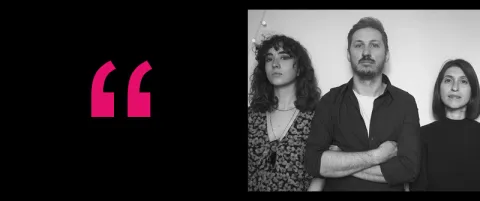
"My year at IESA gave me more experience than I could have imagined. I was able to gain so much valuable knowledge, thanks to exceptional professors. This is reflected in the fact that I graduated with the highest grade in my class!"
Eva
Certification
This master’s program prepares for the RNCP title level 7:
"Artistic and Cultural Project Administrator"
| Employment Rate | 74% at 6 months for students awarded the title, class of 2024 (most recent France Compétences rate - RNCP title 42330) |
|---|---|
| Certification Rate | 100% (class of 2024) |
| RNCP Code | RNCP 42330 |
This title is issued by: ECAD Consultants - IESA arts&culture by decision of the Director General of France Compétences dated 05/29/2026 for a period of 3 years.
How to Apply to IESA?
Admission is based on an application file and an interview with the admissions committee
- 1. You find out about the school and its programs.
- 2. You apply to the school by filling out a form on the website.
- 3. We call you to schedule an admission interview
- 4. A few days after the interview, you receive your admissibility decision
How Much Does the Program Cost?
For the 2026-2027 year, the fees are as follows:
| Year | Tuition |
|---|---|
| Program | 17 500 € |
| Tuition fees | 150 € |
Applicants can contact the admissions team to find out about:
- payment options
- funding options
The MBA lasts more than a year: 9 months of classes and 6 months of internship
- Number of hours of face-to-face teaching and exams: 578 h
Current-year schedule: the number of hours may vary slightly from year to year.
Prerequisites:
- Hold a level 6 certification (Bac+4), or an equivalent degree (foreign degree, etc.), or have earned 240 ECTS credits, in the targeted or a related field (culture, art, project management, communication, marketing, events, etc.)
Admission is based on the submission of an application file and an interview with the admissions committee.
Access timeframes: Admissions are open from October 2025 to August 2026 for the September 2026 intake and from February 2025 to December 2025 for the January 2026 intake.
Applications are processed within 3 weeks maximum after receipt of the complete file. Enrollment is possible until the start date, subject to available places.
By exception, enrollment is possible after the program start date, following review and verification of the learner’s ability to catch up on the learning already delivered, within a maximum of 1 month after the start of the program.
More information: international@iesa.fr
The program takes place at IESA on the LE DELTA campus (16 rue Claude Bernard, 75005 Paris) and at partner cultural venues.
IESA premises are accessible to people with disabilities. The admission interview and the course of study can be adapted to the needs of those concerned, who are therefore invited to express them as soon as they apply to the school. Contact: handicap@iesa.fr
If you do not obtain the RNCP title, please note that if you have validated all the skills of a block, that skill block is yours permanently.
Equivalences: In the case of an equivalence, whether through VAE and/or the award of a skill block or an equivalent certification, it is up to the applicant to present this equivalence to the jury for validation.
Pathways: not applicable
Further studies: This program is designed for professional entry.