Confronting Repressed Emotions
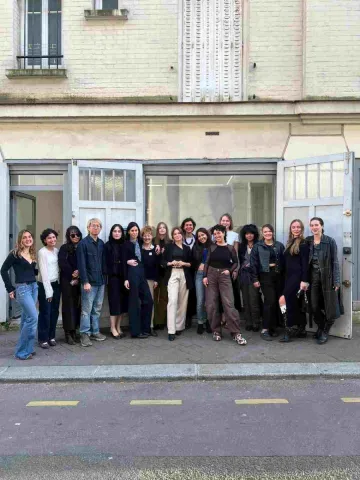
At Julio Art Space in Paris, a poignant exhibition, designed by second-year Bachelor in Arts Management students, confronts visitors with an essential question: what becomes of the emotions we were taught to suppress? Titled “Our Emotions Were Not Meant to Survive,” the exhibition offers a sensitive meditation on care, vulnerability and the transformative power of artistic expression.
At the heart of the curatorial vision lies a radical reappropriation of fragility as strength. In many societies, vulnerability, often associated with the feminine, is considered a weakness, something to hide or overcome. This exhibition, on the contrary, firmly opposes that. It asserts that caring is not only an act but also a language: intimate, intuitive and deeply human.
Raising Emotion to the Rank of Necessity
Inspired by Audre Lorde’s powerful essay, Poetry is Not a Luxury, the exhibition raises emotion to the rank of vital necessity. Just as Lorde describes poetry as a tool for awakening and transformation, the works on display act as visual poems: delicate yet assertive expressions that make the invisible visible. Through their practices, the artists shape their own language, drawn from the raw material of lived experience.
Weaving a Web of Care
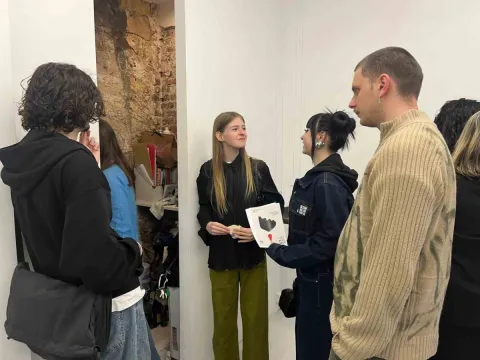
The exhibition presents the works of Irene Abello, Odonchimeg Davaadorj and Bruna Vettori, three artists whose voices resonate with clarity and tenderness. Each explores themes of trauma, healing and the female psyche, weaving a web of care that transcends borders and time. Their creations are not only artistic expressions but also become vessels of collective memory and emotional resonance.
Abello, Davaadorj and Vettori do not merely present their stories: they invite us into them. Through installations, drawings and mixed media, they hold up a mirror to viewers for their own silent experiences. The works vibrate with a quiet strength, following the lines of grief and hope, loss and renewal. These are not works that shout; they whisper — and it is precisely in that whisper that they capture all our attention.
Building an Emotional Sanctuary
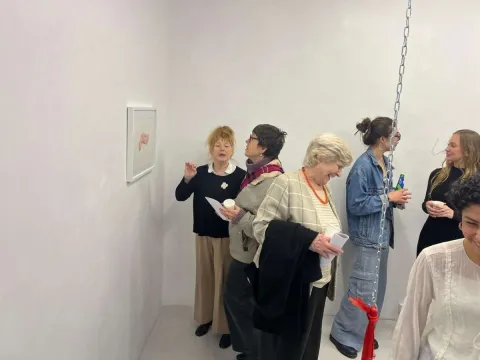
From this exhibition emerges a kind of sanctuary: an emotional space where gentleness is valued and where community is woven through mutual recognition. As visitors move through the space, they are not mere observers but become participants in an ongoing process of care. The exhibition then becomes a form of collective exhalation, a reminder that surviving one’s emotions is an act of resistance, and that in fragility lies a quiet but persistent strength.
“Our Emotions Were Not Meant to Survive” is much more than an exhibition. It is a gesture of solidarity, a healing ritual and a courageous affirmation: emotions deserve to be seen, felt and honored.