JUVENARS-IESA PRIZE 2023
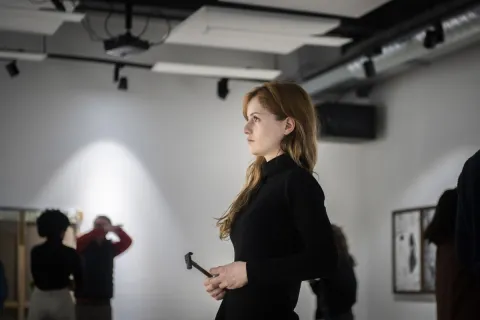
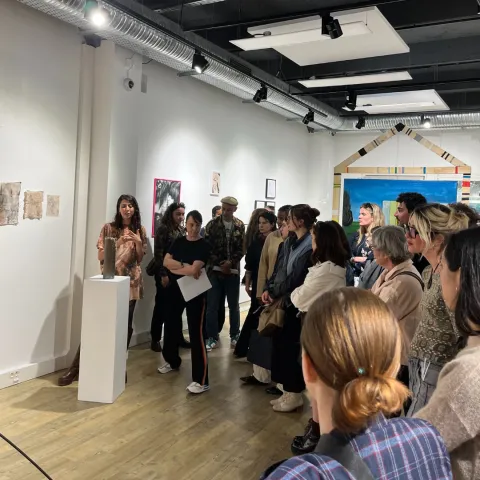
On May 3 and 4, 1st-year Bachelor in Art Trade and Expertise students presented the 8th edition of the Juvenars-IESA Prize. This Prize supports young contemporary artistic creation.
It is open to all artists under 30 who are not represented by a gallery.
The winner receives:
- an endowment of 3,000 euros,
- exhibits a solo show in the IESA gallery at 1, cité Griset in Paris XI.
- a work is presented within the IESA Room, IESA’s virtual gallery in the metaverse.
The amount of the endowment comes from the proceeds of an auction organized by half of the Bachelors 1 Art Expertise and Trade class.
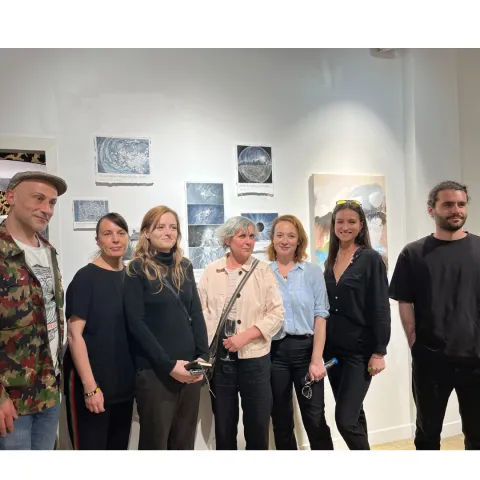
The artists selected this year are:
Laura Bartier, Louise Belin, Nina Bureau, Alexia Caamano, Philippe Caamano, Clara Cimelli, Axel Coutaz, Marie Cunin, Roméo Dini, Joy Lavigne, France-Lan Lê Vu, Lola Plantard, Joao Simoes, Isadora Soares.
This year, the jury is made up of:
- Da Cruz, street artist,
- Véronique Masini, exhibition curator, iconographer at Éditions Gallimard
- Angelina Medori, cultural development at Arte
- Boris Grebille, director of IESA
- Lehna Lalmas-Schramm, IESA lead student
- Maud Prangey, Juvenars-IESA Prize project coach
Each artist presents a work exhibited in the IESA Gallery. These works use a variety of media and processes.
Artists are selected on the basis of their application file following a call for applications distributed in art schools in France and abroad: École des Beaux-Arts, École Nationale des Arts Décoratifs, Villa Arson, École Duperré, the Arles school – ENSP, etc.
Winning artists of previous years
- Loup Lejeune 2016
- Ferdinand Makouvia 2017
- Roxane Kisiel 2018
- Yuqing Wang 2019 - Special mention for Liang Fu
- Coline-Lou Ramonet 2020
- Bowen Zao 2021
- Zoé Metra 2022 - Special mention Alexis Puget
- Louise Belin 2023 - Special mention Philippe Caamano
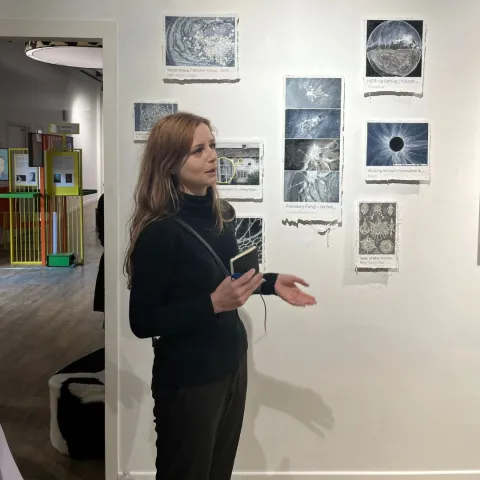
Meet the 2023 winner: Louise Belin
“Through my painting practice, I explore the question of how images become narrative, as well as an ecology of memory and forgetting, notions that are today transfigured by digital technology.
I am particularly interested in the poor image, a copy of a copy, compressed until the subject mutates. I find this material among the least well-indexed results, in the limbo of the internet, between hypermnesia and the ever faster obsolescence of images. I navigate it through different systems: algorithmic drift, encounters in various groups or forums, use of the Wayback Machine, etc. Painting these images allows me to slow down their reception and surround them with a new kind of attention.
The aim is to evoke an ambivalent feeling, between the ubiquity and globalization made possible by the internet on the one hand, and the fatigue linked to the fragmentation of narratives and distance on the other.”