

Living Through Ecocide: A Powerful Artistic Call to Fight Environmental Destruction
Organized by the Butterfly Effect Collective, formed by our MBA Arts & Cultural Management students.
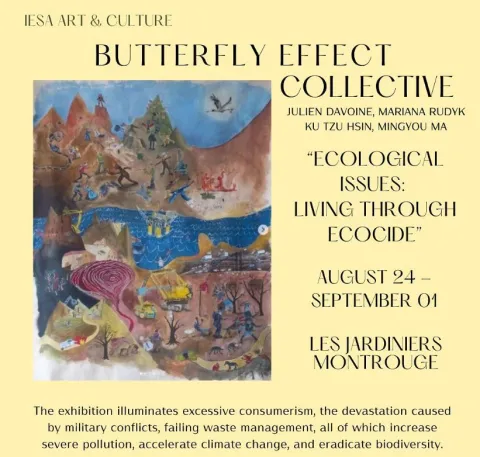
In an era marked by a growing ecological crisis, the exhibition “Ecological Issues: Living Through Ecocide” emerged as a critical visual discourse examining the impact of human actions on our planet.
“Ecological Issues: Living Through Ecocide” was designed to inspire an active and thoughtful response to environmental preservation. The term “ecocide” was coined by Professor Arthur W. Galston. The neologism is built from the words “ecosystem” and “genocide,” in order to symbolize the systematic and massive destruction of ecosystems. The term is used in reference to deliberate acts of destruction of a natural environment, as well as to all acts that, by their nature, may cause an environmental catastrophe.
The exhibition aimed to encourage visitors to reflect on their personal role and on the collective impact of human behavior on the environment. It was a call to action, encouraging a shift from passive awareness to proactive engagement and positive change. It was presented as a stimulating conversation on ecological preservation that explored the complex influences of human activity on the Earth.
The exhibition highlighted the ecological challenges that society faces today: excessive consumerism, the devastation caused by military conflicts and poor waste management. All these factors increase the degree of severe pollution, accelerate climate change and eradicate biodiversity.
The exhibition featured works by the following international artists:
- Margot Anquez Barisea. Margot is a French artist who explores the links between geological and human landscapes. Her artistic practices aim to shed light on the themes of fertility and the transformation of ecosystems due to human industrial activities, which are major issues of our time.
- Célia Boulesteix. Célia is a French artist whose multidisciplinary practice explores contemporary space as a timeless, anti-monumental and intimate vector, producing nonlinear poetic narratives through her works.
- Tanguy Pitavy: French multidisciplinary artist who works with metal as well as papier-mâché, computing or ceramics. For him, art is a way of transcribing his thoughts onto the canvas. Tanguy’s art conveys a committed message by caricaturing our society.
- Oleksii Furman: Ukrainian documentary photographer and visual storyteller, a graduate of the University of Missouri and co-founder of New Cave Media, an immersive storytelling studio in Kyiv, Ukraine. He covered the 2013-2014 Ukrainian revolution and the annexation of Crimea, and continues to work on documenting the war in Ukraine.
- Olga Karika: Olga explores the reinvention of classical canons drawn from the traditions of the Northern Renaissance and the classical heritage. Her artistic practice modernizes and reinvents classical motifs and symbols by mixing contemporary techniques with historical influences. Olga creates works that challenge and broaden the viewer’s understanding of classical art, inviting them to see these timeless themes in a new light.
- Dima Astafiev: Dima is a Ukrainian generative artist. He explores the new practice of merging data and art, brilliantly creating immersive installations and generative graphics. Using real-time data models and integrating human input, Dima transforms various datasets into diverse digital art creations.
- Emilio Chapela: The artist approaches the environmental crisis from different angles, mixing philosophical and historical perspectives with a critical analysis of programming, the Internet and artificial intelligence. He also incorporates scientific and anthropological research to denounce the pollution of rivers and other bodies of water in Latin America.
Each work served as a beacon for introspection, forcing viewers to face the harsh realities of environmental degradation for which we are all responsible. The artists, though varied in their techniques and perspectives, share a common commitment to using their art to question, critique and offer insightful narratives that provoke a reassessment of the normative behaviors underlying our society.
In this exhibition, art becomes a force of persuasion, advocating change and encouraging a deeper connection with current issues. It invites the public to reflect on personal responsibilities and to imagine new possibilities for environmental stewardship. “Living Through Ecocide” aims not only to inform and disturb, but also to inspire and mobilize collective action toward a more sustainable and respectful coexistence with our planet.