Wiley Meets David at Malmaison
The MBA in Arts & Cultural Management students inspired the curator of the exhibition "Wiley Meets David", Emmanuel Delbouis, a member of the jury for the degree-awarding Titles for IESA’s MBAs and a brand strategy consultant for the Ministry of Culture (France).
The exhibition "Kehinde Wiley Meets Jacques-Louis David" at the Château de Malmaison brings together the portrait of Napoleon painted by Jacques-Louis David in 1800 and its contemporary version imagined by Kehinde Wiley in 2005. An unprecedented encounter that opens a reflection on the codes of representing power, the importance of the historical contexts of artworks, and the element of staging inherent in every portrait.
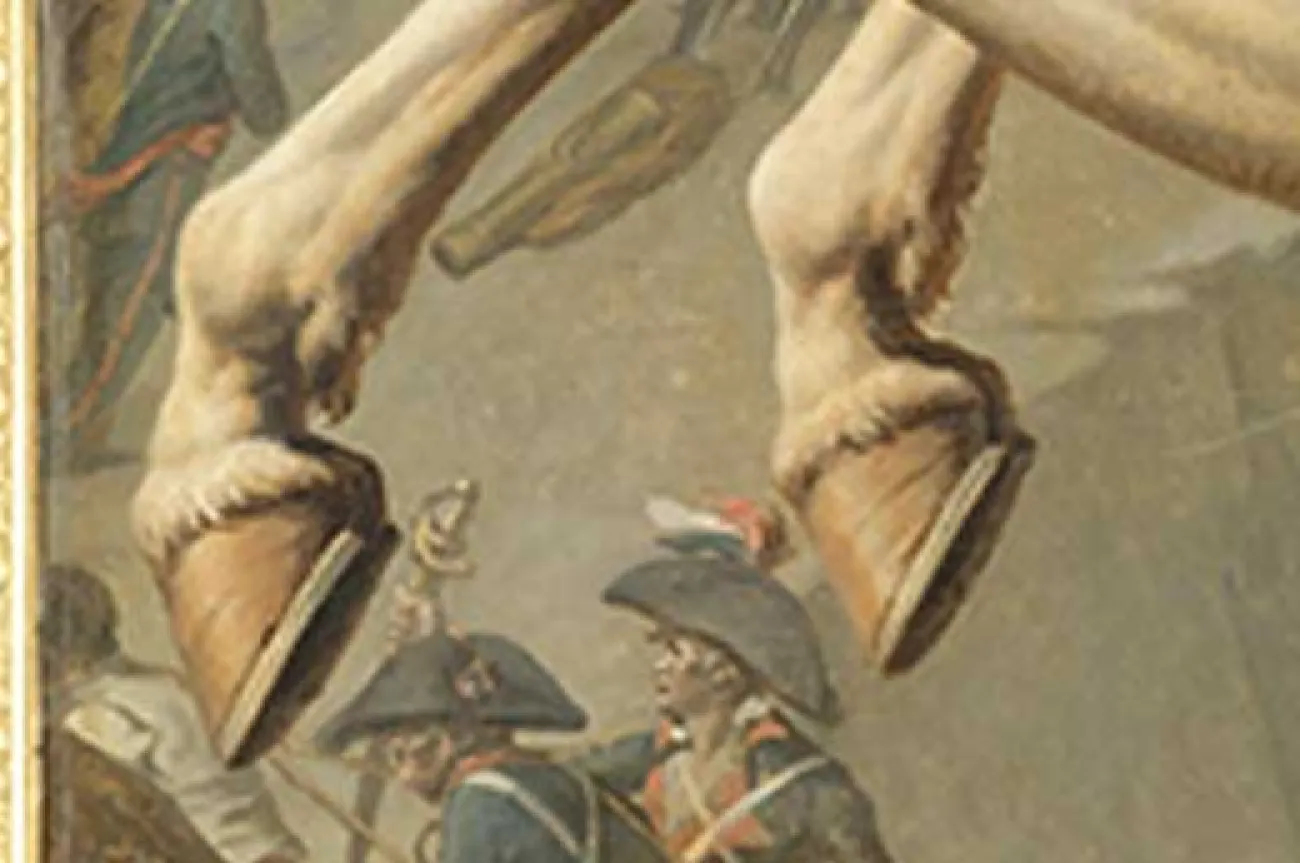
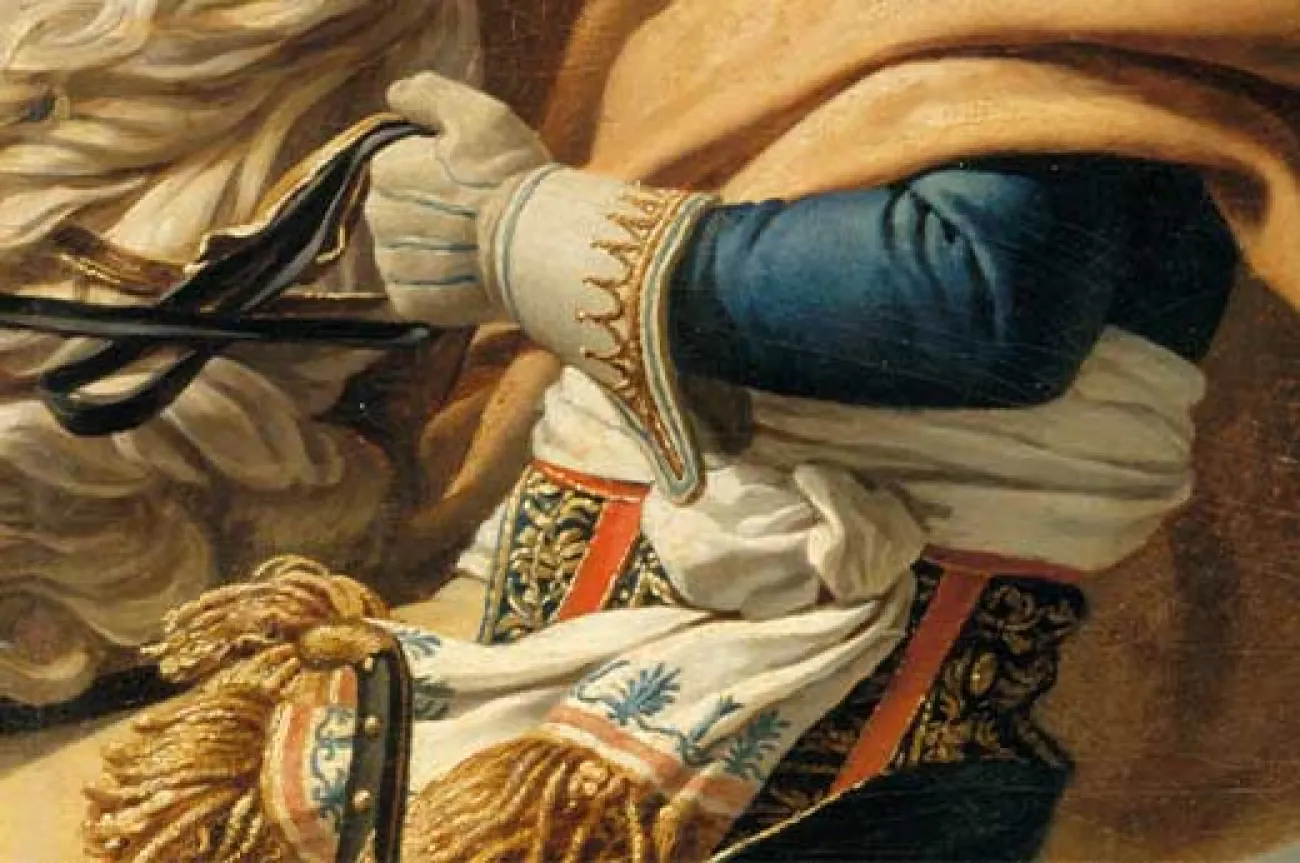
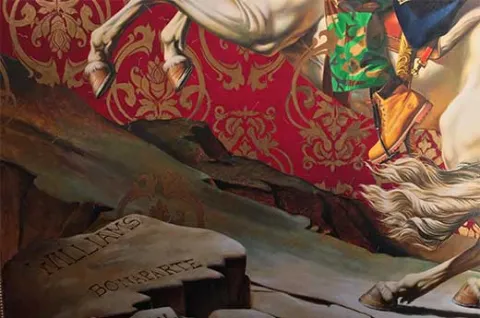
The exhibition "Kehinde Wiley Meets Jacques-Louis David" at the Château de Malmaison offers for the first time, in collaboration with the Brooklyn Museum in New York, a dialogue between the famous painting Napoleon Crossing the Alps at the Grand Saint Bernard Pass, a depiction of Napoleon painted by Jacques-Louis David in 1800, and its contemporary reinterpretation, titled Napoleon leading the Army over the Alps, created in 2005 by the American artist Kehinde Wiley.
Kehinde Wiley Meets Jacques-Louis David at the Château de Malmaison
The painting Napoleon Crossing the Alps, an emblematic work by Jacques-Louis David, depicts Napoleon in a calm pose on a spirited horse, placing him in the line of great conquerors such as Hannibal and Charlemagne. This powerful composition, commissioned by the King of Spain, subsequently traveled widely, from Madrid to the United States and then to Malmaison in 1949.
While Jacques-Louis David’s work has inspired many other artists, whether for exercises in faithful copying or, on the contrary, appropriation, it is Kehinde Wiley who draws from it the most meaning-laden version with his large composition painted in 2005. Since 2001, the American artist, born in 1977, has been interested precisely in the great tradition of the historical portrait and explores its mechanisms and implications.
A Reflection on Historical Portraits by Kehinde Wiley
Historical portraits, whose purpose is to highlight and establish the model’s social status and power, are indeed privileged tools for studying how certain groups of individuals have been excluded from the narratives of art history and European history. Kehinde Wiley’s paintings bring back to center stage African American models who, like himself, are partly excluded from society.
Thus, in Kehinde Wiley’s painting Napoleon Leading the Army over the Alps, the horse and part of the setting of the original painting are retained, while the figure of Napoleon Bonaparte is replaced by that of an anonymous African American man wearing a headband, combat trousers and Timberland shoes, all typical attributes of contemporary youth. Part of a series of equestrian portraits titled Rumors of War, this work challenges the canons of art and opens a reflection on the codes of representing power.
Wiley Meets David at Malmaison