

Interview with Juan Zhou, head of the Asia department for the Applied Research Centers of IESA arts&culture.
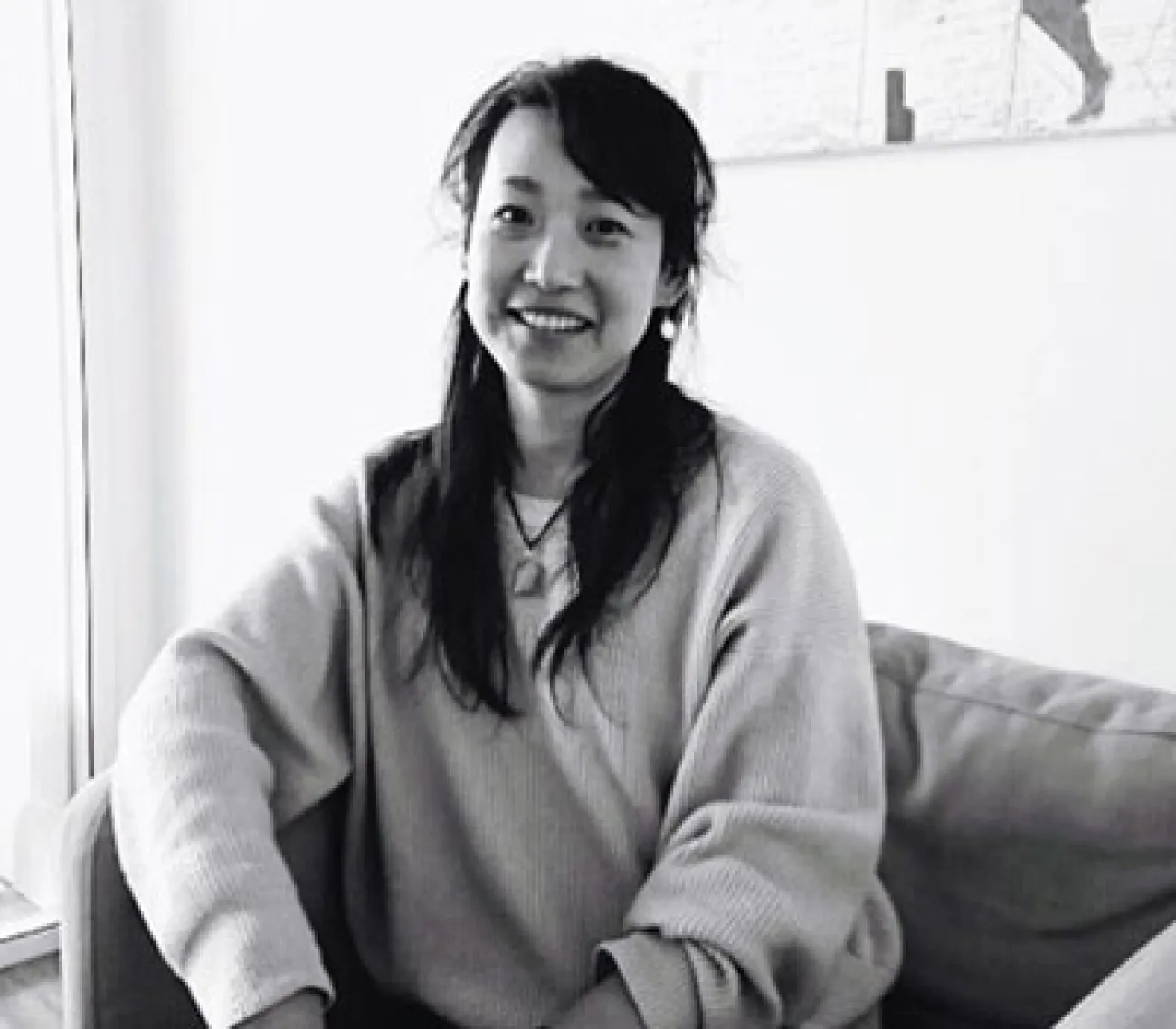
Juan Zhou is Chinese, which allows her to understand as closely as possible the issues and challenges attached to the department she oversees. For several years she has shown real commitment to this department, putting her knowledge and know-how to work to help bring to fruition the missions that IESA entrusts to her.
What is your role within IESA arts&culture?
As head of the Asia department, my main role is to develop and disseminate research projects through organizing conferences, producing exhibitions, hosting artists/experts for masterclasses, and setting up programs with partner universities and fine arts academies.
The Asia department also supports students in their projects or internships related to Asian culture. In addition, we have set up a preparatory program, in partnership with the Cours de Civilisation Française of the Sorbonne, to ensure good preparation and academic integration into the programs for Asian students.
What is at stake for your department?
The work set up in our department helps both to feed research resources and to develop the professional network. Students can better prepare to carry out their projects and to work in a globalized context. The Asia department represents an international dimension that is attracting more and more attention from our students.
In close collaboration with Grecia Caceres (head of the Latin America department) and Hafida Jemni Di Folco (head of the Africa department), the Asia department builds bridges between the world’s different cultures.
You recently organized the exhibition "Une gestuelle sérielle: au-delà de l’encre" by Xingqian Ye. What motivated you to exhibit this artist?
Xingqian Ye is a Chinese artist who has lived in France for more than 30 years. This dual culture makes his work original and contemporary but without a break from Chinese tradition. The exhibition sets his works against the gaze of Professor Bernard Franco, a specialist in comparative literature at the Sorbonne University.
This followed the symposium set up with the École Nationale des Chartes on the subject of intercultural travel, to which the artist and Professor Franco were invited.
What are the main messages that emerge from this exhibition?
Beyond the dialogue, the exhibition lets us discover a dimension of Chinese contemporary art that is perhaps overlooked. As Boris Grebille, director of IESA arts&culture, says, "Too often, Chinese contemporary art is set against traditional painting, the former being closer to Western creation and paradigms, the latter being only a repetition of an ancestral art. While it is true that these are two often watertight worlds, whose markets and distribution operate in parallel, this view is largely reductive and stems from a facilitating classification system that does not grant the creativity of some current traditional painters their rightful share in a contemporary inquiry into representation and into questioning our world."
What upcoming news does your department have this year?
Following the seminar in the "one story, one research" series and the lecture on traditional Chinese painting, the Asia department supports a project by a Bachelor in Visual Arts and Exhibition student, Yan Ding, who succeeded in setting up a print exhibition at the Town Hall of the 13th arrondissement for Chinese New Year.
In March, we will soon welcome a calligrapher to IESA arts&culture for a lecture with demonstration.
Starting in May, projects will multiply: a street art festival (a project by a group from the Master’s in Performing Arts) will take place in Wuhan, as well as major symposia in Beijing and Hangzhou, in partnership with the Sorbonne University and Chinese universities.