

The artistic director is the creative force behind a cultural organization, responsible for defining, selecting, building, and coordinating the cultural offering. They are involved in selecting works, developing artistic projects, production monitoring, and programming, as well as in the communication and promotion of the artistic offering.
What does an artistic director in the performing arts and cinema do?
In the cultural sector, the artistic director relies on their vision and references, which they align with the objectives of their organization and the expectations of audiences to produce the best offering.
Their tasks and activities differ depending on the characteristics of their position. In large organizations, they may focus mainly on selecting a major artistic offering, whereas in small organizations, they will manage all aspects from creation to distribution of works, sometimes taking on the roles of director, programmer, producer, and communications officer.
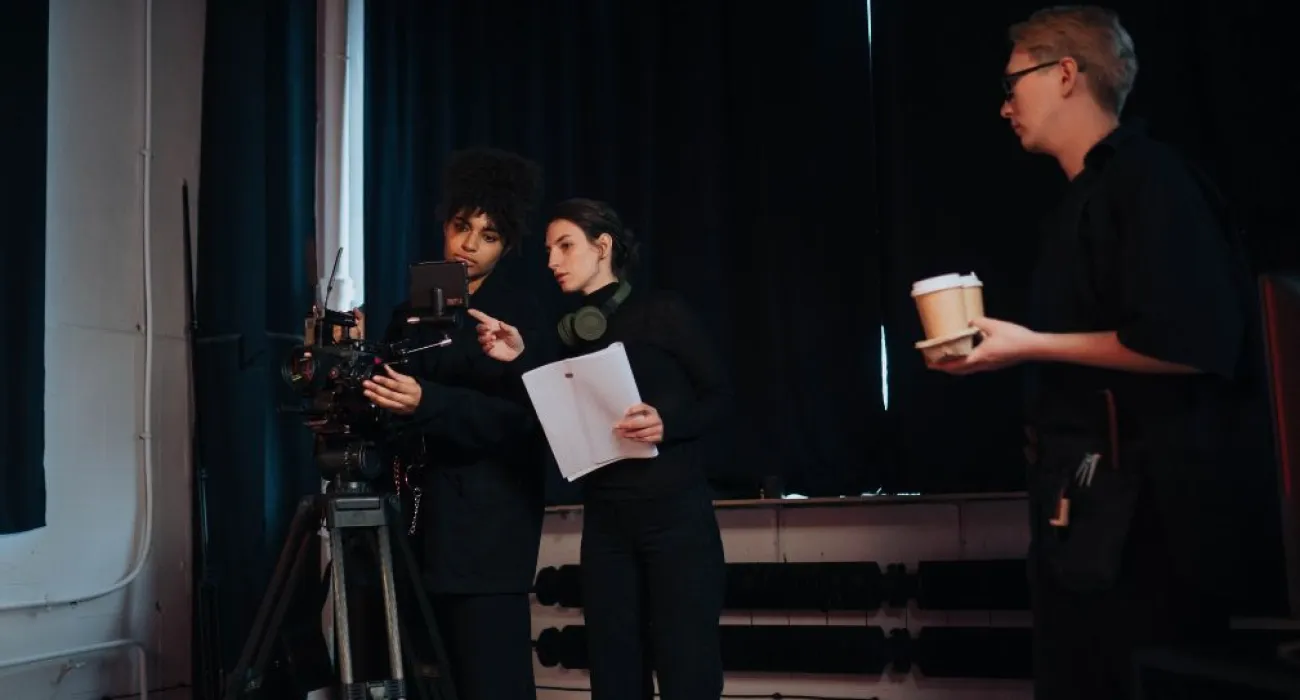
Areas and Topics of Intervention
Artistic direction activities in the world of culture, performing arts, and audiovisual and film works can include:
- The production and selection of musical works for labels.
- The programming of films or series for television and cinema.
- The design and implementation of cultural seasons for theaters, including plays, ballets, concerts, and other forms of performing arts.
- The development of innovative artistic projects that may include interdisciplinary collaborations, special events, and festivals.
Duties and tasks:
They are responsible for choosing the works and develop the artistic project.
Tasks: Analyzing audience issues and expectations, defining the organization’s artistic policy, receiving and reviewing artistic projects, canvassing and recruiting new artists and projects, selecting projects consistent with the artistic policy.
They oversee production (if a cultural production organization).
Tasks: Negotiating production partnerships, supervising internal teams, overseeing production.
They steer programming (if a cultural presenting organization).
Tasks: Negotiating distribution partnerships, scheduling works within the cultural season, monitoring distribution and studying impact on audiences.
What are the skills and qualities of an artistic director?
The artistic director embodies the spirit of the organization or project they work on; they are in command of the artistic aspect while also managing people and files. The ability to communicate and bring people together is essential.
Professional skills:
- Mastery of artistic fields, creative processes, cultural requirements,
- knowledge of audiences, organizations and developments in the cultural sector,
- mastery of the technical stages of producing a work and/or a show, knowledge of funding schemes and social legislation,
- English.
- Skills in leading and developing a partner network.
Personal qualities and aptitudes:
- Cultural curiosity, artistic sensitivity, and open-mindedness,
- ability to anticipate, critical thinking, persuasiveness, negotiation skills,
- creativity and dynamism
- interpersonal skills.
What training and profile do you need for artistic direction?
To become an artistic director, you generally need more than five years of experience as a manager of a cultural organization or performance programmer. Artistic sensibility is also essential, and practice in an artistic field may be required.
The profession is accessible with higher education at the Bac +5 level in cultural management, with possible specializations in performance production administration, cultural institution management, performing arts, artistic direction of cultural projects, or arts and culture professions, as well as the level A civil service competitive exam.
After an undergraduate degree in all kinds of fields related to art and culture (theater, performing arts, literature, anthropology, fine arts, cultural and creative industries /link /, etc.), students in initial training can turn to university Masters or to those offered by schools specializing in each artistic field.
IESA, a leading school for the Arts and Culture, offers three Masters that train, among other things, for these roles:
- In artistic direction of sound and visual works and in film
- In artistic direction of performances:
- In artistic direction of musical works
For experienced professionals who need to complete and deepen their project management skills and knowledge, IESA has designed a specialized Professional Master in Cultural Project Management
How do you become an artistic director?
- In large private companies, the artistic director is generally appointed by the managing director or the board. In the public sector, this appointment often falls to the ministry or decision-making bodies.
- In small performing arts organizations, it is common for the director or founder to also serve as artistic director. In other artistic fields, such as music, audiovisual and film, the roles are split.
The jobs held before reaching an artistic direction position may include:
- Performance venue administrator
- Programmer / Programming Manager
- Production Manager
- Stage Director
The artistic director can move up to director of a performance venue, label, radio station or cinema, or to Producer.
Find here the career profiles that may also interest you: