

Constantly renewing itself for centuries, the art market continues to attract many young graduates.
Considered hard to access, this field is entered through programs offered by specialized art history schools such as IESA arts&culture.
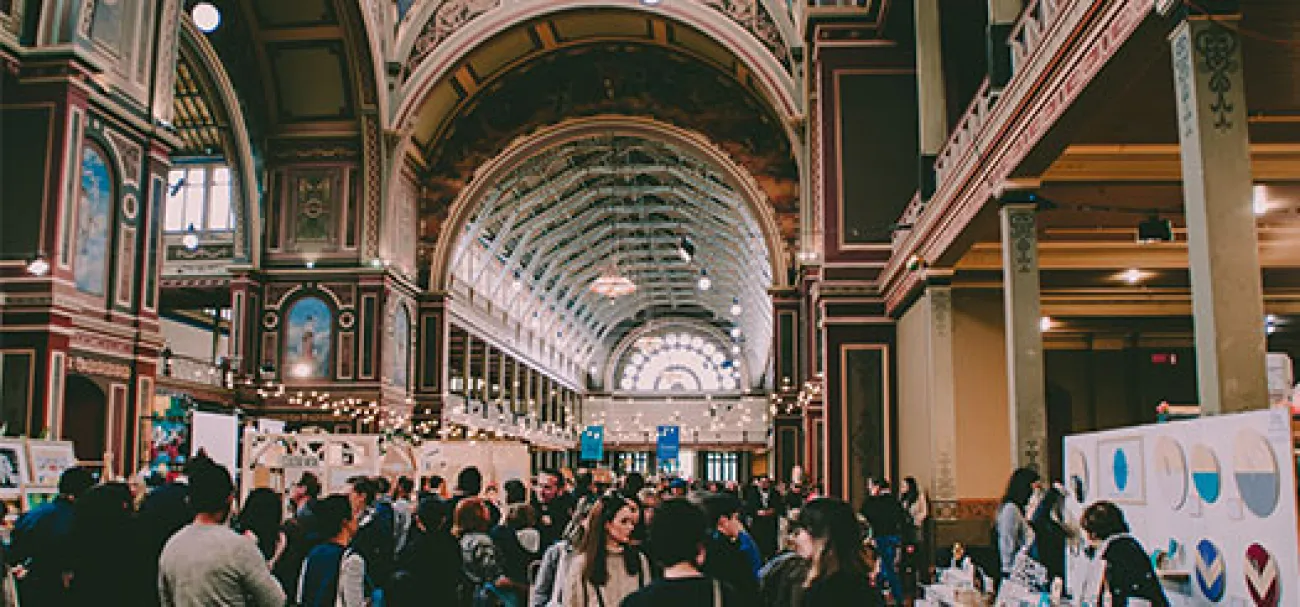
Definition of the art market
A market is a place where goods and services are bought and sold. This place is multiple when speaking of the market of a sector in general: it is the meeting of supply and demand, of sellers and buyers.
The art market corresponds to transactions carried out as part of sales of art objects between the different marketplaces, namely auction houses, galleries, and online art sales and auction platforms, as well as the players: art dealers, auctioneers, gallery salespeople, intermediary agents, collectors, and investors.
The market is organized through these different dimensions and places of exchange. It evolves according to trends and the enthusiasm that can build for a style, an artist, an era: tribal and early art, modern art, contemporary art, and so on.
The value of works of art fluctuates according to the health of the art market, which depends on very many criteria: trends, investor interest, speculation, taste for a type of iconic piece, and so on.
Works of art are very diverse: paintings, sculptures, ethnographic objects, installations, furniture, and so on. And for each of these types of works or objects, it is the artist’s technique and aesthetics that give it its intrinsic value, and demand on the market that gives it its financial value.

How does the art market work?
The art market is made up of different venues, sellers and buyers. They do not all have the same goals or the same buying and selling methods. It is an international market which, like all markets, goes through more or less dynamic phases depending on the economic climate. The investment guarantee represented by famous major paintings does not weaken. The art market is fueled by several factors: the need for investment (taxation, speculation), collectors' search for pieces, needs and wishes in terms of decoration and furnishing, and pieces coming onto the market as part of an inheritance.
The major players in the art market
Auction houses are among the main players in the art market. They also sell collectibles (and therefore investment items) that are not strictly speaking "artworks," such as cars and jewelry.
Activities of an Auction House
An auction house organizes and communicates around a sale (exhibition catalog, purchase of advertising space, etc.) that corresponds to a specific moment bringing together the objects, the clients and the auctioneer. This sale takes place in person, but it is possible to take part by placing a bid by phone or via auction houses' websites that broadcast the sale live.
Sales can also take place entirely online on the Drouot live website "drouot.com"; this site works in the same way as a traditional saleroom where customers can take part and bid.
Buyers registered beforehand; they were also able to view the objects online and in person during the viewing days, their reserve price and their estimate by the experts of the auction house, and consult the catalog. Each object is presented by the auctioneer to the buyers, who bid until the highest price is reached.
The auction house’s remuneration comes from commissions paid by the buyer and the seller.
The major auction houses in France
- Christie’s
- Sotheby’s,
- Artcurial,
- Aguttes,
- Drouot,
- Tajan,
- Millon,
- Bonhams and Cornette de Saint,
- Ader,
- Piasa, etc.
It should be noted that the art market is organized rather by continent, because passionate collectors, or buyers acting on a mandate, travel easily between the major capitals known for their auction houses and galleries: London, Brussels, Paris, but also Lisbon and other European cities.
Galleries
Galleries work directly with their clients. They connect works with clients. They advise and guide their choices and introduce artists to them. On the artist side, they select those whose work and approach they value.
Galleries can work with pieces coming directly from the artists who create them (primary market) or with older pieces that previously belonged to others (secondary market).
Galleries are known for the quality of the works they offer, their various areas of specialization, and also the prestige of their clientele. It is generally the taste and people skills of the gallery owner that make their reputation. Communications officers, sales advisors, experts, etc. are part of gallery teams.

Gallery/artist collaboration:
The gallery can collaborate with the artist in different ways:
- by signing an exclusivity contract with them for a fixed term, which assures them that the gallery will buy the works they produce during that period, allowing them to focus on the creative process.
- by offering them a commission, that is, a percentage, on the sale of their works. It is up to the gallery to handle client relations: communication around an exhibition, the opening, negotiation, delivery, etc.
Art Fairs
Art fairs bring together, at the same time and in the same place, the biggest players in the art market.
These are events that set the rhythm of life for galleries and art dealers as well as collectors. They make it possible to build ties with foreign clients, and also to carve out a place and reputation within the profession.
Some of the best-known and most reputed international art fairs and shows
- Art Basel in Basel, Miami Beach, and Hong Kong
- Frieze Art Fair in London, New York, and Los Angeles
- TEFAF in Maastricht
- BRAFA in Brussels
- FIAC (International Contemporary Art Fair) in Paris
- The Venice Biennale
- The Armory Show in New York
The art dealer
The art dealer’s profession is different from that of a gallery owner because there are no ties with artists. The art dealer buys and resells objects and works on the secondary market. Their personality and taste, as with the gallery owner, are the basis of their reputation, as is their ability to champion the works they sell to their clientele.
They must be very active in the various venues of the art market and track down pieces. Their eye and their detailed knowledge of their areas of specialty make them an expert: authenticity, rarity, price, history, they research the objects they buy.
They organize thematic exhibitions, publish catalogs, and attend international fairs and trade shows as an exhibitor or visiting buyer.
The online art market
With the technical possibilities of buying at auction houses without having to travel, but also the growth of online auction sales platforms like eBay, many online sales concepts have developed in the art market.
Catawiki and Artprice are the best-known online auction platforms. The great challenge of this type of marketplace is to guarantee buyers the authenticity and quality of an object they will have seen only in a photograph.
Digital marketing plays a central role for these types of art sellers, who must succeed in reaching an expert clientele and positioning themselves as full-fledged players in this market.
Ancient Art
Ancient Art , "Ancient Art" in the singular or plural, refers to artistic productions predating modern art, that is, the arts of ancient and antique civilizations. It is therefore very broad, ranging from African statuary to pre-Columbian pottery, by way of various Asian Iron Age objects, Oceanian sculptures and ritual objects, Siberian ivory objects, and so on, and includes among others:
- Tribal art or indigenous art, organized by continent or region
- Archaeology
- A variety of pieces: statues, ritual and funerary objects, paintings, sculptures, amulets, textiles, weapons and accessories, decorative and architectural elements, armor, jewelry and clothing, etc.
Modern Art
Modern art refers to a period tied to the development of Western arts, marked by liberation from classical rules of technique and style. Room is made for experimentation and freedom of expression, based on feeling and interpretation. Many movements make it up: Impressionism, Fauvism, Cubism, Surrealism, Expressionism, etc. Modern art pieces are paintings and sculptures.
Contemporary Art
Contemporary art begins in the postwar period. It is characterized by its great diversity of styles and media and stands out for its willingness to explore new and often provocative themes, such as politics, society, identity, and technology, as well as by a questioning of conventions and the traditional boundaries of art.
Contemporary art pieces can be very diverse: installations, video, performance, digital art, etc.
Which School Should You Choose to Work in the Art Market?
For those looking for an art market school, IESA arts&culture opens its doors so they can benefit from programs tied to careers in the art and culture market. Founded in 1985, this international institution offers programs that award titles registered with the RNCP. By joining IESA, students prepare for the marketing, appraisal and exhibition of artworks and art objects through the various programs of the art market stream.
The Art Market Programs Offered by IESA arts&culture
To engage with every issue in the art market and to develop technical skills, IESA arts&culture offers different programs available to baccalauréat graduates as well as to students who have already started a program or professionals changing careers.
Bac+3 - Bachelor
After the baccalauréat, students can enroll in the Bachelor in Art Market. Also open through lateral admission for holders of a Bac+1 or Bac+2, this art market program lets you specialize in painting and graphic arts or in furniture and art objects. Students develop expertise in art history and discover careers in selling and distributing artworks. At the end of this program, they can deepen their knowledge in this field by joining the Master in Ancient Art, the Master in Contemporary Art or the Master in Exhibition Curation. IESA arts&culture also offers the Professional Master in Art Market, whose objectives include analyzing the needs of the various players and the economics of the art market, or learning to manage a gallery or an antiques shop.
To enter art market careers, knowledge of movements, styles, and works is of course essential. It must be paired with a concrete understanding of the players and the professional habits internal to this market and its related activities, as well as its culture and codes.
Master in Art Market Programs
Professional Programs in the Art Market
The professional programs are for people who already have a first professional exposure to the art market and who want to build their skills, change direction, or specialize.